Biography
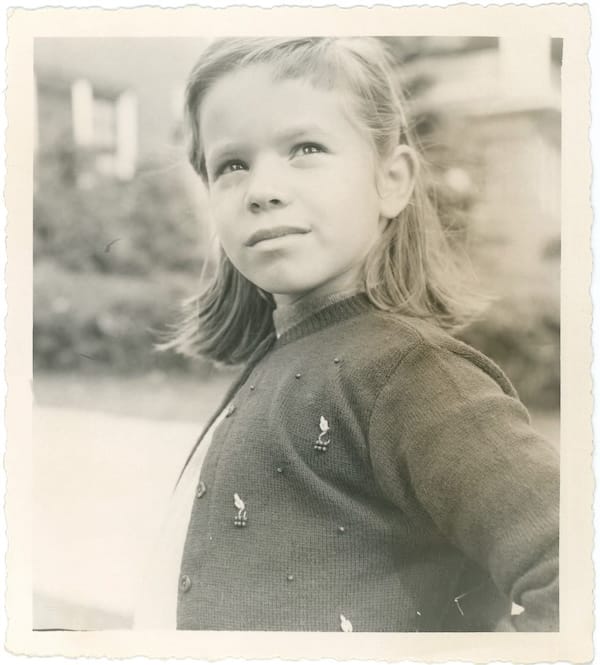
Susan Rothenberg was born on January 20, 1945, in Buffalo, New York, to Adele Rothenberg (née Cohen), president of the local Red Cross chapter and homemaker, and Leonard Rothenberg, a produce vendor who, with partners, built his business into a regional chain of supermarkets. From a young age, Rothenberg showed an interest in drawing, and encouraged by her family, she took art lessons as a child and teenager.
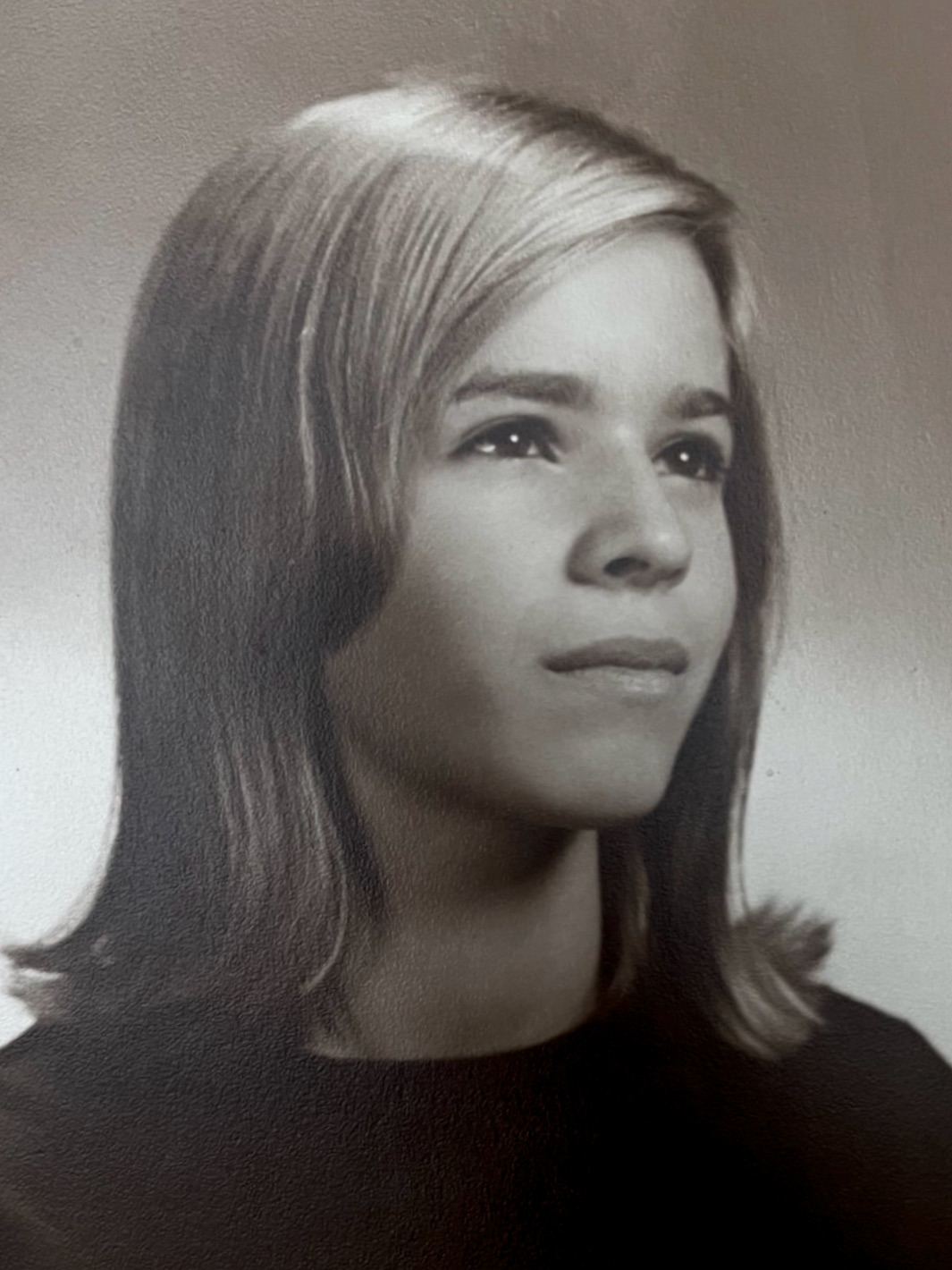
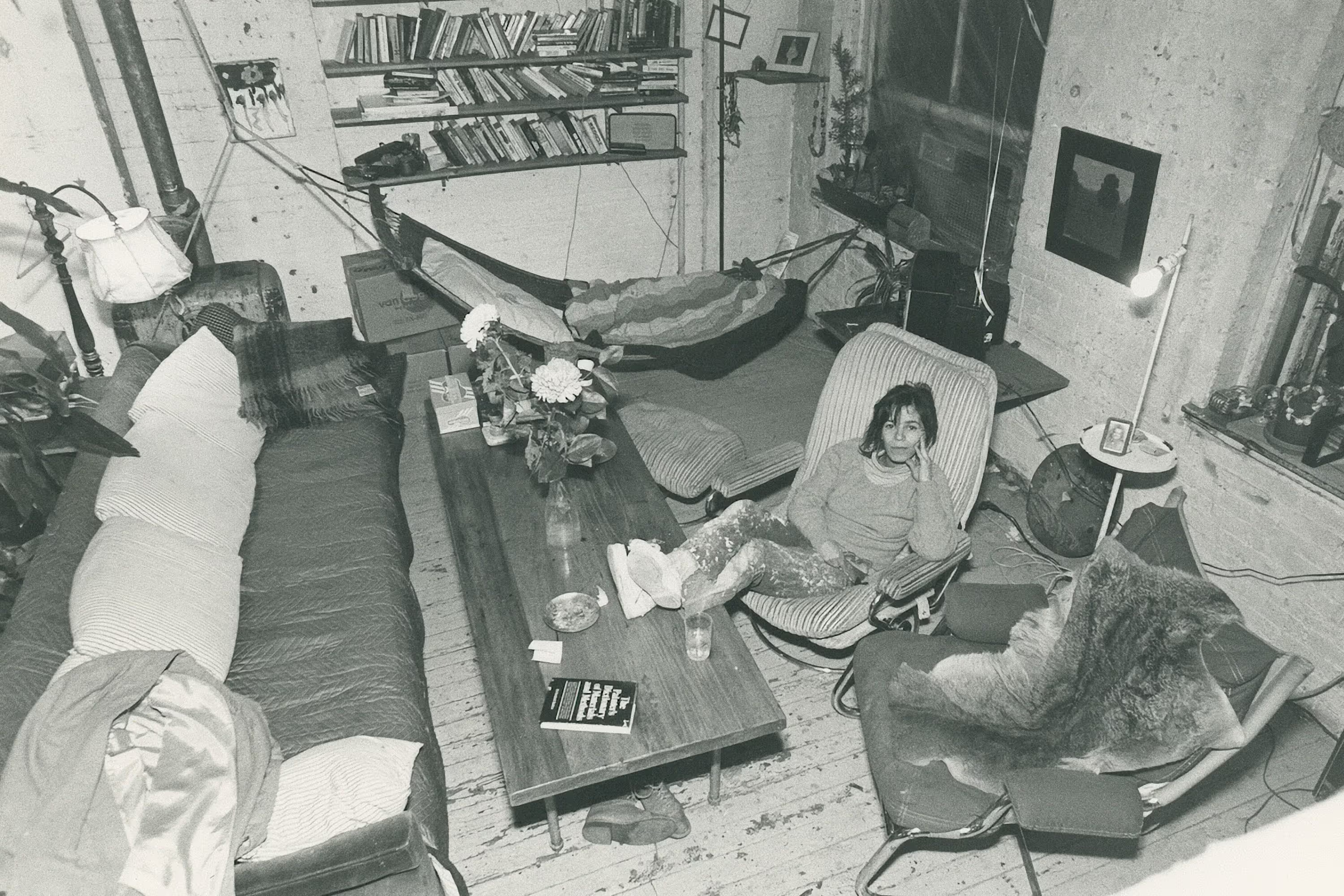
Upon her arrival in New York City in September 1969, Rothenberg called the sculptor Michael Singer, a friend from Cornell, who let her stay with him in the old synagogue on the Lower East Side where he lived and worked. Through Singer and her other friends from school Allan Saret and Gordon Matta-Clark, she soon found herself amidst the city’s flourishing downtown scene: artists Tina Girouard, Nancy Graves, Mary Heilmann, and Richard Serra; dancers Deborah Hay, Trisha Brown, Yvonne Rainer, and Deborah Hay, and Joan Jonas; and musicians Philip Glass, Dickie Landry, and Steve Reich.

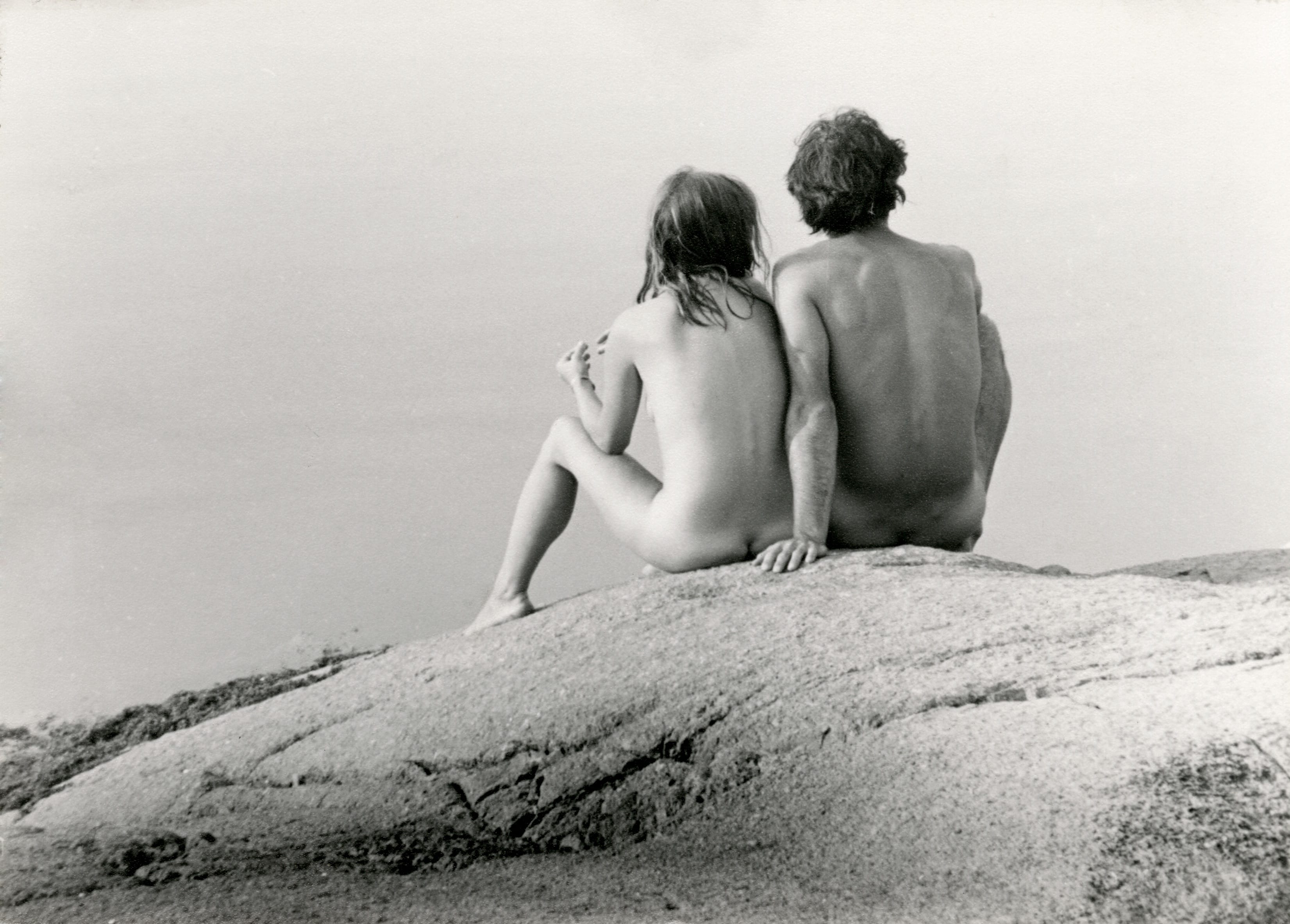
Rothenberg began taking movement classes with Hay and participating in Jonas’s performance pieces, including Mirror Piece I (1969), Jones Beach Piece (1970), and Underneath (1970). In 1970, Rothenberg met the sculptor George Trakas at Hay’s “slow dance class” in a loft on Spring Street. They began a relationship and, in 1971, married at Manhattan’s City Hall. Their daughter, Maggie, was born in 1972. (Rothenberg and Trakas later separated in 1978, divorcing in 1979.)
In 1974, Rothenberg made First Horse: an image of a horse in profile, painted in muted sienna tempera on a piece of unstretched canvas. She began experimenting with painting horses at larger sizes, including human scale. With this intuitive leap — akin to Jasper Johns’s discovery of the American flag motif by way of a dream — Rothenberg inaugurated a body of paintings which decisively reinvigorated painting across the globe, and secured her singular and profound place in the history of art.
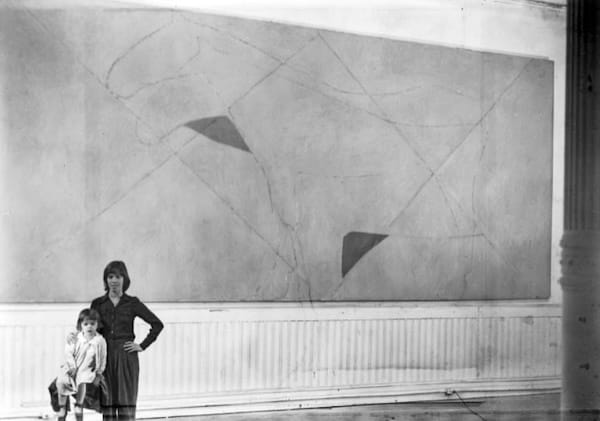
The following year, Rothenberg had her first solo exhibition—Three Large Paintings—at 112 Greene Street, an artist-run space opened in 1970 by Jeffrey Lew, Matta-Clark, and Saret. In order to fill the cavernous space, Rothenberg scaled up her horses to create three immense paintings ten feet high by ten, fifteen, and twenty-four feet long.
Her first commercial solo exhibition was in 1976 at Willard Gallery, which began representing her after she met gallery director Miani Johnson through Holly Solomon, the first collector to purchase a horse painting (Triphammer Bridge). That year, William Rubin—then-director of the Painting and Sculpture Department at the Museum of Modern Art, New York—acquired Axes (1976) from Willard Gallery for the museum’s collection. The Museum of Modern Art acquire more than 40 of Rothenberg's works throughout her lifetime, and honored her with an atrium exhibition in 2022.
Rothenberg continued painting horses, now portraying them in isolated fragments and from disorienting perspectives, as in Blue Frontal (1978) and Outline (1978–79). However, by 1980, “the horse just ran out,” Rothenberg later reflected.
As the 1980s progressed, Rothenberg began incorporating figures into her work with greater frequency—first friends and family members, and then in 1984, the modernist painter Piet Mondrian as a motif, portrayed in various scenarios (such as the1985 Mondrian Dancing, which appeared in that year’s Whitney Biennial). Beginning in 1986, she began depicting figures in motion, such as spinners and vaulters. And in 1988, she received her first commission, for which she painted 1–6, a series of dancers in motion across six wood panels, installed in the dining room at investment firm PaineWebber’s New York headquarters.
In 1988, Rothenberg was seated next to the artist Bruce Nauman at a dinner party. They began a relationship. In 1989, they married, and in 1990, Rothenberg moved to New Mexico to live with Nauman. Together they designed and built a house and two studios on their ranch in Galisteo, a small town that has attracted artists and writers such as Agnes Martin, Harmony Hammond, and Lucy Lippard.
Rothenberg’s relocation to New Mexico marked a fundamental shift in her life and work. At first apprehensive of the isolation, she soon embraced the vast open skies of the southwest and their radically different light. This new environment led to an innovative treatment of space, as Rothenberg conflated vertical and horizontal planes into a layered aerial perspective. Colors changed, too: looking at the earth around her—the clay pockets of the Galisteo Creek, for instance, which Rothenberg's friend Priscilla Hoback introduced to her—she began painting in shades of terra cotta and pink that she had not explored since the 1970s.
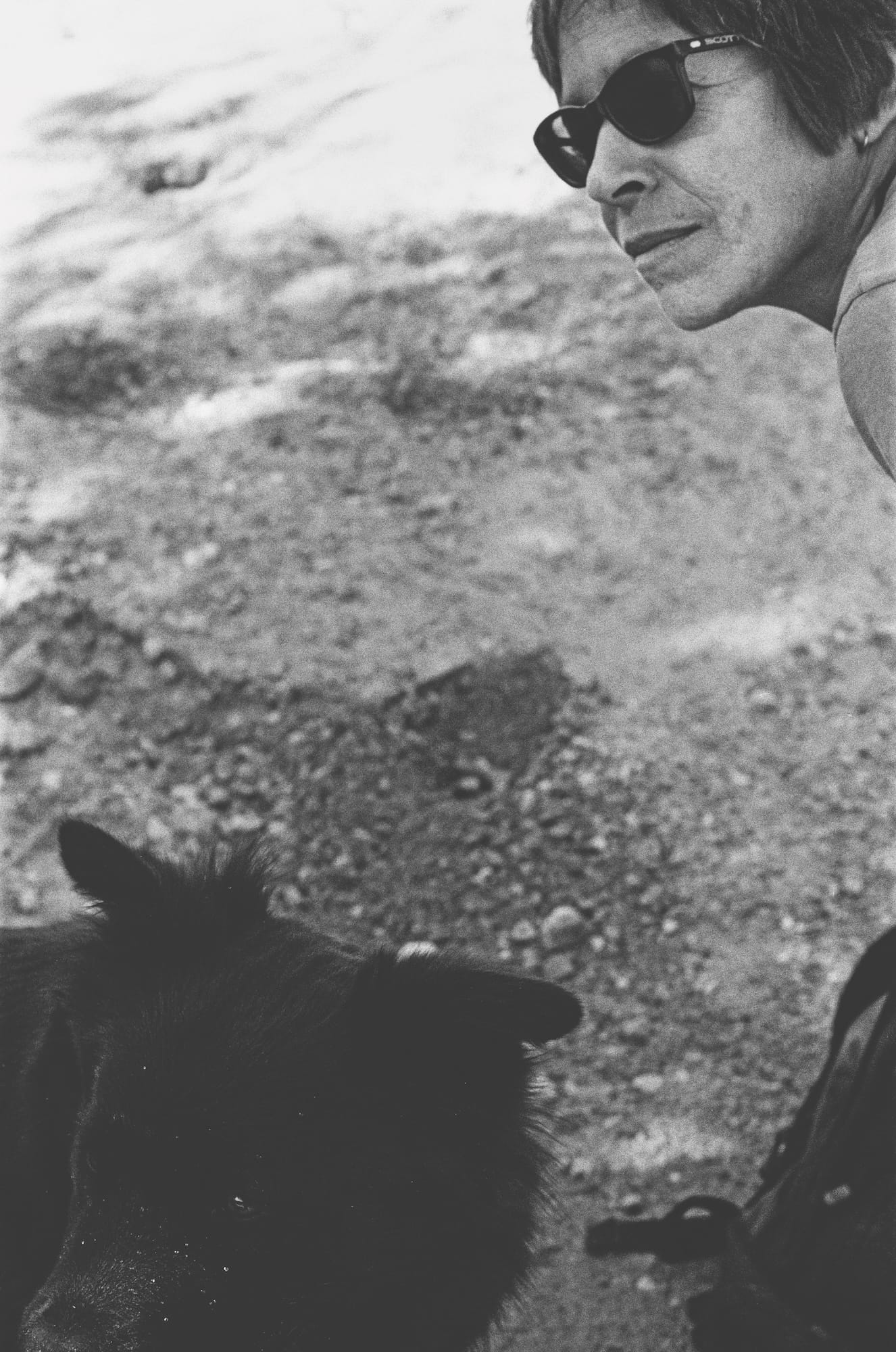
Increasingly, Rothenberg turned to narrative in her paintings, which began to reflect the events in her life. This included occurrences both ordinary—playing poker and dominos; the dog chasing a rabbit—and the notable—an accident involving horses or the near-fatal bee sting she suffered when practicing tai chi at her friend Ramona’s house.
Throughout the 1990s, Rothenberg was the subject of several retrospectives—the Albright-Knox Art Gallery, Buffalo, New York (1992; traveling), which felt like a homecoming for the artist; the Museo de Arte Contemporáneo de Monterrey(MARCO), Mexico (1996); and Herbert F. Johnson Museum of Art, Cornell University, Ithaca, New York (1998; traveling)—and included in key exhibitions of contemporary art—such as Documenta IX, Kassel, Germany (1992) and Robert Storr’s 2007 Venice Biennale exhibition, Think with the Senses – Feel with the Mind, which featured Rothenberg’s fence paintings, distinctly inspired by ranch life.
Rothenberg lived in Galisteo, painting and following the daily rhythms of the ranch, until her death at home on May 18, 2020, at the age of 75.